

Editor’s note: Faig Mahmudov is a journalist based in Azerbaijan. The views expressed in this article are his own and do not necessarily reflect those of News.Az.
Azerbaijan has entered a new phase in the South Caucasus in terms of economic development, regional integration, and geopolitical stability. The country’s balanced economic policy, institutional reforms, and strategic investments in transport and energy projects, along with new regional realities shaped in the post-conflict period, have significantly increased Azerbaijan’s economic weight. This process is not limited to macroeconomic indicators alone; it also directly affects the country’s international investment climate, the reduction of political risks, and long-term sustainable development prospects.
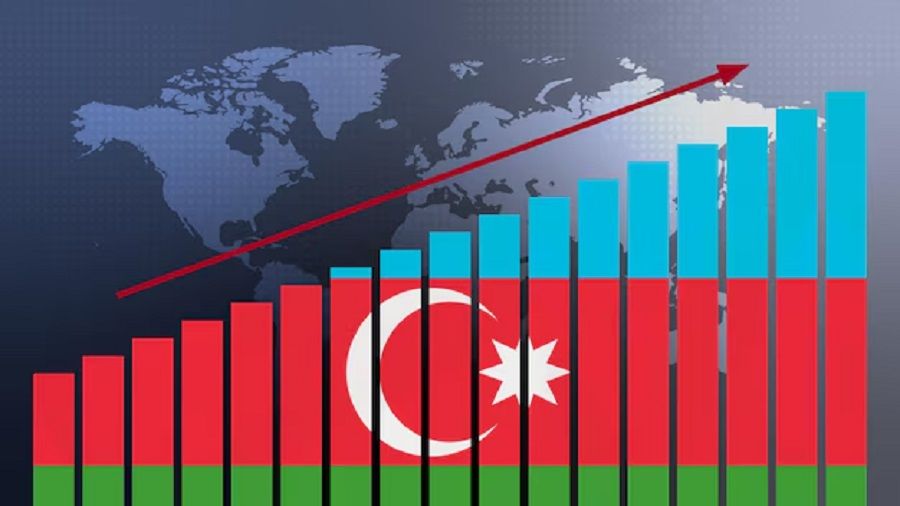
Between 2023 and 2025, Azerbaijan’s gross domestic product recorded average real growth of more than 4 percent, while growth in the non-oil sector exceeded 6 percent. Nominal GDP approached 130 billion manats, clearly reflecting the scale of the country’s economic potential. GDP per capita neared $12,000, indicating a higher socioeconomic level compared with other countries in the region.
The initialed peace agreement, low external debt levels, substantial foreign exchange and gold reserves, improved credit ratings, growth in the non-oil sector, and clearly defined targets in the energy and information technology and artificial intelligence sectors constitute the main pillars reinforcing Azerbaijan’s position as a regional economic leader.
The paraphed peace agreement between Azerbaijan and Armenia is being seen as a turning point in the political and economic landscape of the region. The long-standing conflict had heightened investment risks in the South Caucasus and constrained capital flows. With the signing of the peace document, the regional risk premium has declined, creating favorable conditions for increased foreign direct investment.
Over the past three years, Azerbaijan has attracted more than $30 billion in foreign direct investment. A substantial portion of this investment has gone not only to the energy sector but also to transport, logistics, industrial parks, and renewable energy. The share of investments from the United States and Europe has risen, now accounting for around 40 percent of total foreign investment.
The peace agreement also establishes a legal and political framework for the restoration of regional communications. The opening of new transport routes could significantly boost transit cargo volumes. Forecasts indicate that, if regional stability is fully maintained, Azerbaijan’s transit revenues could double or even triple in the medium term.
One of Azerbaijan’s key macroeconomic strengths is its low public debt. Recent data indicate that total public debt stands at roughly 21–22 percent of GDP, a level considered very low both in comparison with developing economies and other countries in the region.
External debt ranges between $9 and $10 billion, a level fully manageable relative to export revenues and foreign exchange reserves. Debt servicing accounts for less than 5 percent of total state budget expenditures, providing significant fiscal flexibility.
This low debt burden allows Azerbaijan to dedicate more resources to social projects, infrastructure development, and innovative sectors. In recent years, annual state investment has exceeded 10 billion manats, with a substantial portion allocated to regional development and initiatives in Karabakh.

Azerbaijan’s strategic foreign exchange reserves are a cornerstone of its economic security. Central Bank reserves exceed $11 billion, while the assets of the State Oil Fund surpass $65 billion, bringing the country’s total strategic reserves to nearly twice the size of GDP.
These reserves provide the capacity to fully finance at least three years of imports. Maintaining such levels ensures currency stability, mitigates inflationary pressures, and reinforces confidence in financial markets.
The positive trajectory of Azerbaijan’s international credit ratings reflects the quality of its economic governance. The country’s rating is close to investment grade and carries a stable outlook.
This strong position lowers borrowing costs for both public and private sectors in international financial markets. Interest rates on securities issued by Azerbaijani companies abroad are lower than those of regional peers, improving access to finance for the real economy.
Azerbaijan’s transport strategy has transformed the country into a major logistics hub in the Eurasian region. In recent years, transit cargo volumes passing through the country have exceeded 15 million tons, while freight transport along the Middle Corridor has more than tripled.
The annual cargo handling capacity of the Baku International Sea Trade Port has been expanded to 25 million tons. Freight volumes transported via railway infrastructure grow by an average of 10–12 percent annually, generating hundreds of millions of dollars in transit revenues each year.
More than 20 billion manats have been invested in reconstruction and rehabilitation projects in Karabakh and East Zangezur. Hundreds of kilometres of highways, dozens of tunnels and bridges have been built, and three international airports have been commissioned.
Industrial parks and agro-parks established in these regions have created thousands of new jobs. In the medium term, Karabakh is expected to contribute an additional 3–4 billion manats annually to Azerbaijan’s GDP.
The development of the non-oil sector lies at the heart of Azerbaijan’s economic strategy. In recent years, non-oil GDP has accounted for more than 60 percent of the overall economy, while non-oil exports have approached $3 billion, reaching their highest level in a decade.
Agricultural productivity has increased by more than 25 percent, and the share of value-added segments in manufacturing has expanded. In the post-pandemic period, tourism revenues have approached 4 billion manats.
Azerbaijan’s energy strategy extends beyond oil and gas. By 2030, the country aims to commission 6,000 megawatts of renewable energy capacity, raising the share of green energy in total electricity generation to over 30 percent.
Investments in green energy projects have already exceeded $10 billion. This strategy not only reduces carbon emissions but also strengthens the long-term sustainability of Azerbaijan’s energy exports.

Within the framework of digital economy development, the IT sector’s share of GDP is growing rapidly. Over the past five years, turnover in this sector has more than doubled, supported by hundreds of millions of manats in investments from both public and private sources.
The adoption of artificial intelligence technologies has the potential to reduce operational costs in public services by 20–30 percent, enhancing governance efficiency and overall economic productivity.
These indicators demonstrate that Azerbaijan’s economic growth is not incidental but part of a strategic, measurable, and sustainable development model. The paraphed peace agreement strengthens regional stability, while low debt and high reserves ensure financial security. Meanwhile, growth in the non-oil sector and technological priorities lays the foundation for the economy of the future.
As a result, Azerbaijan has further solidified its position as a state that reinforces economic leadership in the South Caucasus, offers attractive opportunities for global investors, and provides long-term prospects for sustainable growth.