
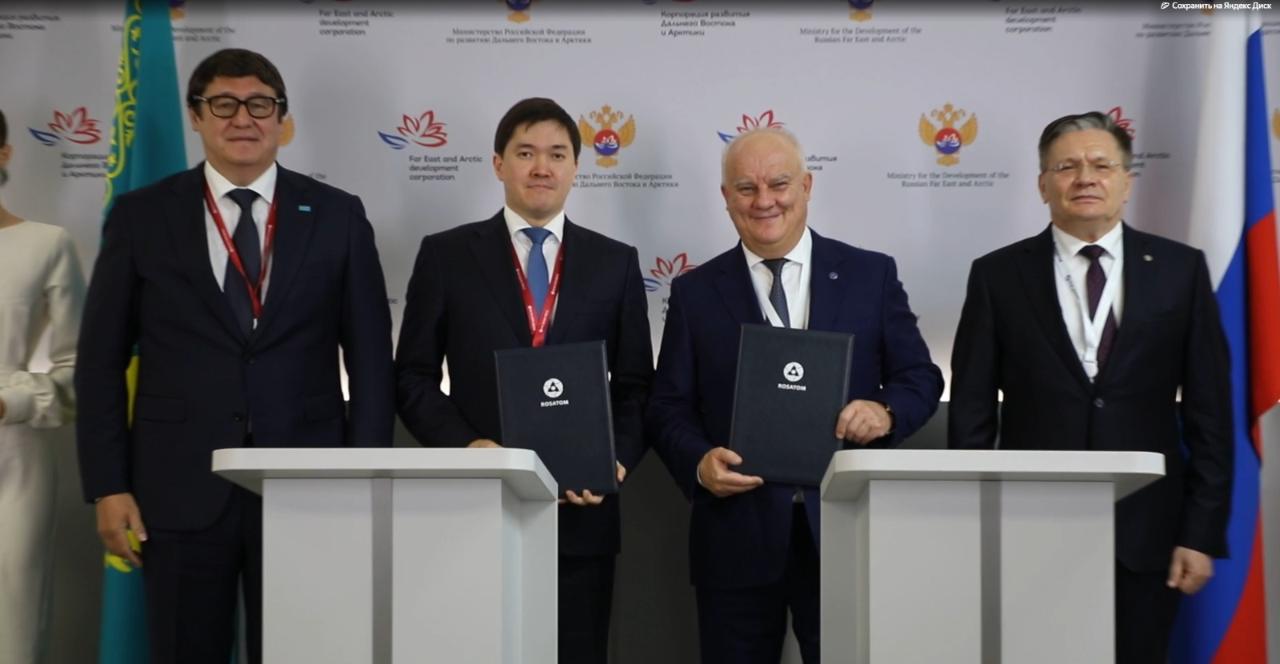
Russia’s state nuclear corporation Rosatom and Kazakhstan Nuclear Power Plants have signed an engineering, procurement and construction contract for the Balkhash Nuclear Power Plant, advancing plans to build Kazakhstan’s first nuclear power station.
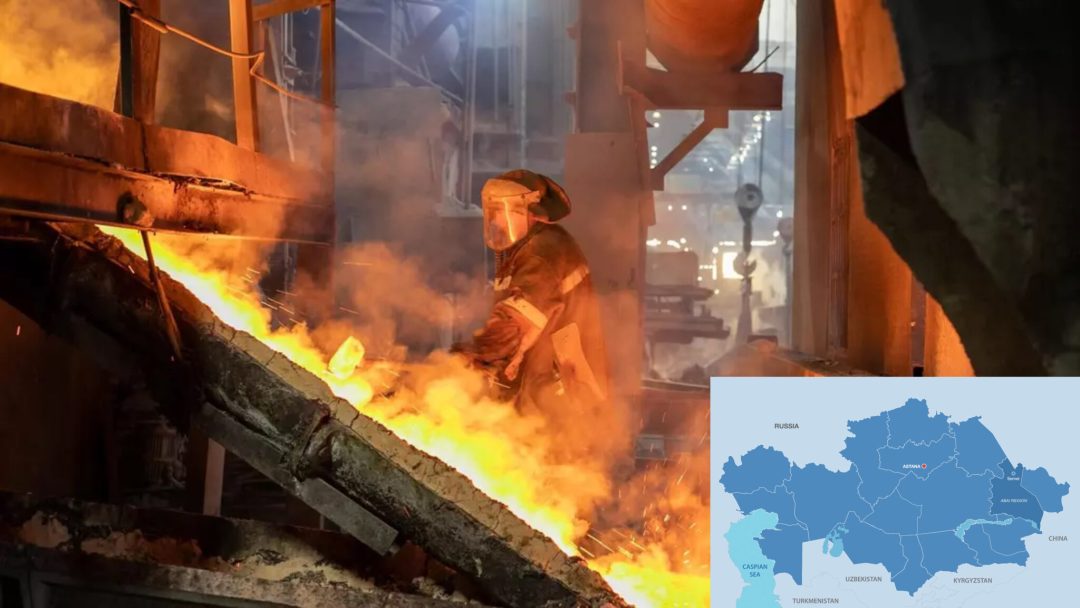
The agreement, signed on Thursday on the sidelines of the Eastern Economic Forum in Vladivostok, covers two power units with a combined generating capacity of 2,400 megawatts. The plant will be built near the village of Ulken on the shores of Lake Balkhash in Kazakhstan’s Almaty Region.
“The document signed today marks a new stage in our cooperation with Kazakhstan,” TASS quoted Rosatom CEO Alexey Likhachev as saying on Thursday. “In the near future, Rosatom will carry out design work and establish an international consortium of equipment suppliers.”
“At every stage of the project, we will remain firmly focused on our main objective: to build and commission power units that meet the strictest international safety and efficiency requirements. We are confident that Russian nuclear technologies will provide a reliable foundation for the Republic of Kazakhstan’s energy independence and sustainable development.”
Rosatom, which will lead an international consortium, will oversee the full project cycle, including design, procurement, construction, commissioning and handover of the completed facility.
Site surveys for the future plant are already underway and are expected to be completed in 2027. Engineers will then prepare documentation needed to secure construction permits. Construction is expected to begin in 2027, with the plant scheduled to enter operation in the mid-2030s.
Rosatom was selected in June 2025 to lead the international consortium for Kazakhstan’s first modern high-capacity nuclear power plant after Astana said the Russian company had submitted “the best proposal.” It competed against China National Nuclear Corporation, France’s EDF and South Korea’s Korea Hydro & Nuclear Power.
Research work near Ulken began in August 2025. The project is expected to use two Russian-supplied Generation III+ VVER-1200 pressurized water reactor units.
The project is estimated to cost around $16.4 billion, including approximately $14.4 billion for the power units and another $2 billion for infrastructure, safety systems and fuel for the warranty period. Russia is expected to provide up to 85% of the financing through a state export loan, while Kazakhstan will cover the remaining 15%.
The plant is expected to take about 11 years to complete, with commissioning targeted for around 2035-2036. Rosatom has also said it sees no obstacles to involving companies from other countries in the international consortium.
The project marks Kazakhstan’s return to nuclear power generation after more than three decades. The country previously operated the Soviet-era BN-350 reactor near Aktau, which was shut down in 1999.
Despite being the world’s largest uranium producer, Kazakhstan currently generates no nuclear electricity. The country has accounted for roughly 40% of global uranium mine production in recent years and holds significant uranium reserves.
Kazakh authorities have argued that nuclear power will help meet growing electricity demand, strengthen energy security and reduce the country’s heavy reliance on coal-fired generation. The government is also pursuing additional nuclear projects as part of a broader effort to expand and diversify the country’s power generation capacity.