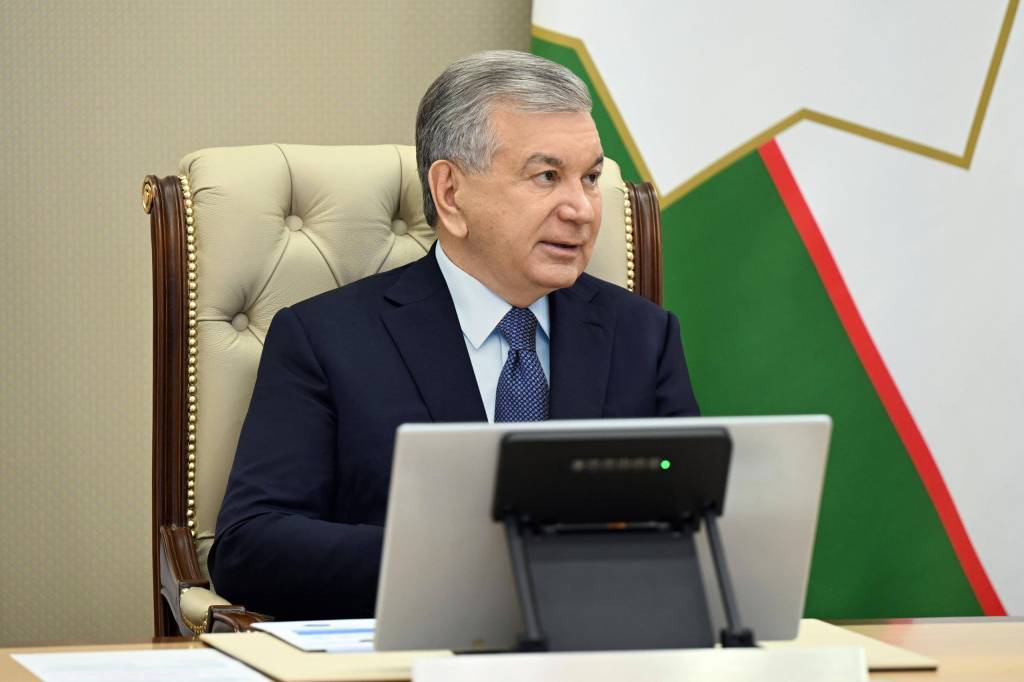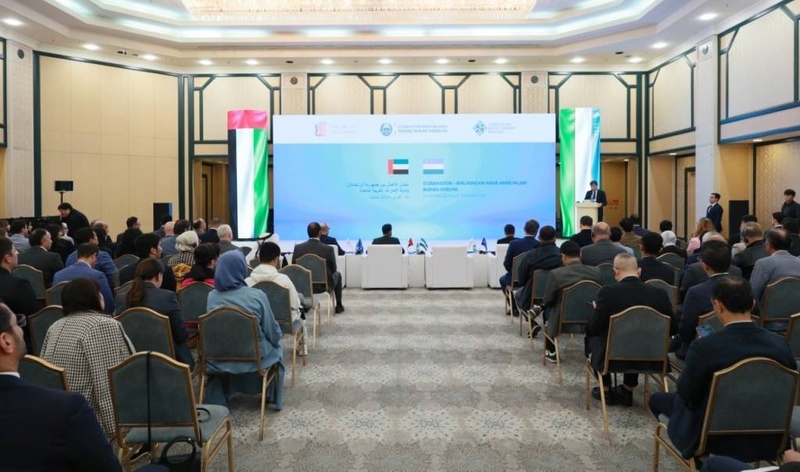


On March 11, President Shavkat Mirziyoyev reviewed a presentation on the progress of implementing major investment projects and launching new production capacities in the chemical industry.
At the event, held in a critical spirit, it was noted that the sector requires a new system of strategic planning and development based on the principle of “goal – action – result”. Instructions were issued to establish specific indicators to increase chemical production, commission new capacities, and expand export potential.
In particular, the task was set to increase the export of the industry’s products to $720 million this year. The need was emphasized to increase production of nitrogen fertilizers to 1 million 120 thousand tons, phosphorus fertilizers to 135 thousand tons, and potassium fertilizers to 222 thousand tons to ensure planned crop yields in agriculture.
As noted, this year, within the framework of implementing 133 projects worth $9.5 billion, the industry and the regions plan to attract $2.5 billion in investments. In particular, within the framework of 24 strategic projects across chemical industry enterprises and regions, it is planned to mobilize $1.3 billion in investment and launch 7 new production capacities.
The progress of projects to expand production at the Kungrad Soda Plant, launch mineral fertilizer production at the Samarkandkimyo enterprise, and increase the capacities of the Dehkanabad Potash Plant was critically reviewed. It was pointed out that delays in the timelines are unacceptable. Responsible officials were instructed, together with investors, to ensure the accelerated completion of these projects.
Attention was also paid to the processing of industrial waste, namely phosphogypsum, accumulated during operations at the Ammofos-Maxam enterprise. The need was emphasized to effectively use the opportunities for producing additional products from it, including sulfuric acid.
Issues related to the formation of a modern scientific and technological infrastructure for the strategic development of the chemical industry were also considered.
In particular, plans were reported to establish a chemical and technological innovation center in cooperation with leading South Korean companies. This center will specialize in conducting scientific research in areas such as gas and coal chemistry, advanced chemical analysis, sorbents, catalysts, and nano- and composite materials, and will become the only research institute of this profile in Central Asia.
The presentation also provided information on the progress of projects to organize the production of solvents, dry cyanides, caustic soda, silicone and mineral fertilizers, modernize capacities for the production of ammonia, urea and ammonium nitrate at the Ferganaazot enterprise, produce ammonium nitrates at Navoiyazot, manufacture household chemicals in Tashkent region, as well as produce a new type of tires at the First Rubber Technical Plant.
In addition, plans to improve project management efficiency at the joint-stock company Uzkimyosanoat were considered.
In particular, an ERP system has been introduced in the company and its affiliated enterprises, integrated with the databases of 21 ministries and agencies, and procurement operators, and 16 information systems have been combined into a single digital platform. It is planned to gradually introduce artificial intelligence technologies into the processes of analyzing and forecasting the financial condition, as well as predicting the demand for mineral fertilizers. In addition, it is envisaged that all stages of the movement of mineral fertilizers, from the enterprise to farmers, will be covered by digital supervision.
The task was set, jointly with the Accounts Chamber, to reduce the cost of chemical industry products by 10-15 percent through reducing energy and raw material costs and implementing digitalization measures.
In conclusion, the Head of State instructed responsible officials to accelerate the implementation of major investment projects in the chemical industry, promptly resolve issues, and commission new production capacities within the established deadlines.