
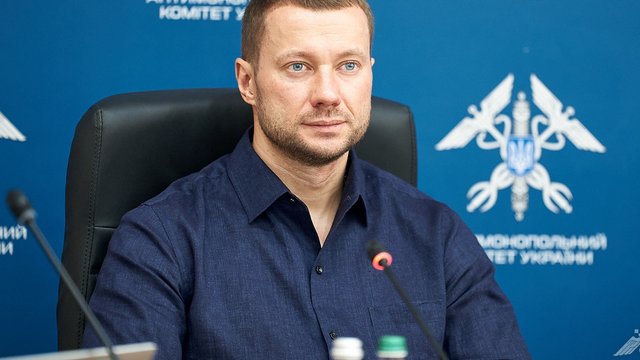
Antimonopoly Committee Chairman Pavlo Kyrylenko cited the rising cost of purchasing petroleum products abroad as one of the factors driving the rise in prices in Ukraine, given the country’s dependence on imports due to the lack of oil refining. However, he did not rule out concerted action by operators.
“The main factors that led to the rise in retail fuel prices were: increased demand and reduced supply and reserves, an increase in the actual cost of purchasing petroleum products and a forecast for further increases in their production costs, an increase in logistics costs, and the inability to compare fuel storage conditions and volumes in Ukraine,” Kyrylenko said speaking in the Verkhovna Rada of Ukraine on Wednesday, where he had been summoned by parliamentarians the day before.
At the same time, Kyrylenko pointed out that the main objective factor that influenced the increase in prices was the shutdown, according to him, of the only oil refinery in Ukraine (the Kremenchuk Oil Refinery) since last year.
“Almost all light petroleum products, equivalent to 85% plus, depend on imports,” the head of the Antimonopoly Committee noted.
He also noted that, starting from February 27, according to information from gas station operators, the volume of purchases of petroleum products, in particular A-95 gasoline, increased by 40-50%, and diesel fuel by 60-140%.
“At the same time, there was a reduction in offers from European suppliers due to the need and clear arguments from European suppliers to fill their own markets,” Kyrylenko explained.
According to him, based on the processing of information received from gas station networks and an analysis of the factors they identified for the significant price increase, the Antimonopoly Committee of Ukraine on Monday, March 9, began reviewing the case on the grounds of violations committed in the retail markets for light petroleum products in the form of anticompetitive concerted actions.
“Despite the presence of objective factors driving the rise in prices for light petroleum products, the committee does not rule out the possibility that this situation could also be caused by individual subjective factors,” the Committee’s head emphasized.
He noted that the current situation cannot be compared to the situation at the beginning of Russia’s full-scale invasion, since Ukraine had huge logistical problems back then, but there was a stable available fuel resource in Europe.
Kyrylenko added that in Europe, a 10.5% increase in fuel prices had already occurred on February 23, while in Ukraine it only reached this level on March 4.