

The veteran industrialist maps out strategy focusing on energy security, governance, and banking sector overhauls.
Former Federation of Bangladesh Chambers of Commerce and Industry (FBCCI) president Mir Nasir Hossain has called for a business-friendly and industry-friendly budget for fiscal year 2026-27.
He said such a budget should help existing businesses survive the current challenges while creating conditions for new investment.
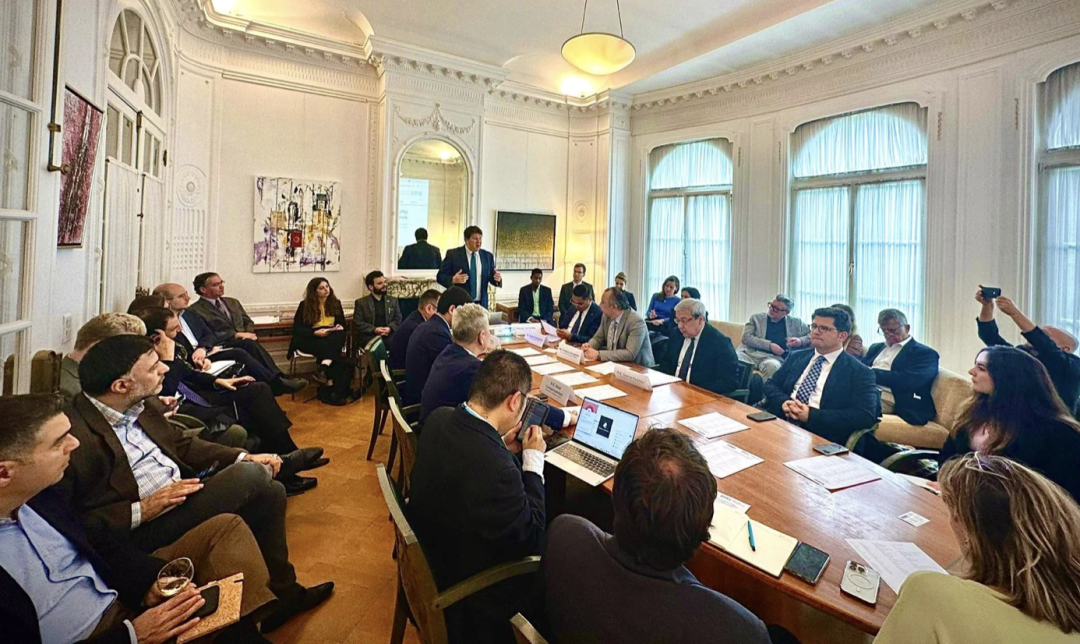
Speaking on bdnews24.com’s flagship discussion programme Inside Out, he said the budget should provide clear directions to support trade, industry and fresh investment.
The managing director of Mir Group, however, urged the government to give greater priority to education and healthcare.
“Education should receive the highest importance, followed by healthcare, then energy, and after that industry and business,” he said.
The programme was streamed on bdnews24.com’s YouTube channel and Facebook page. The BNP returned to power after two decades through the 13th parliamentary election held on Feb 12. The government led by Tarique Rahman is set to place its first budget.

Discussing expectations surrounding the budget, Nasir spoke about the country’s economic challenges, banking sector reforms and measures needed to boost investment.
Energy Security ‘Biggest Challenge’
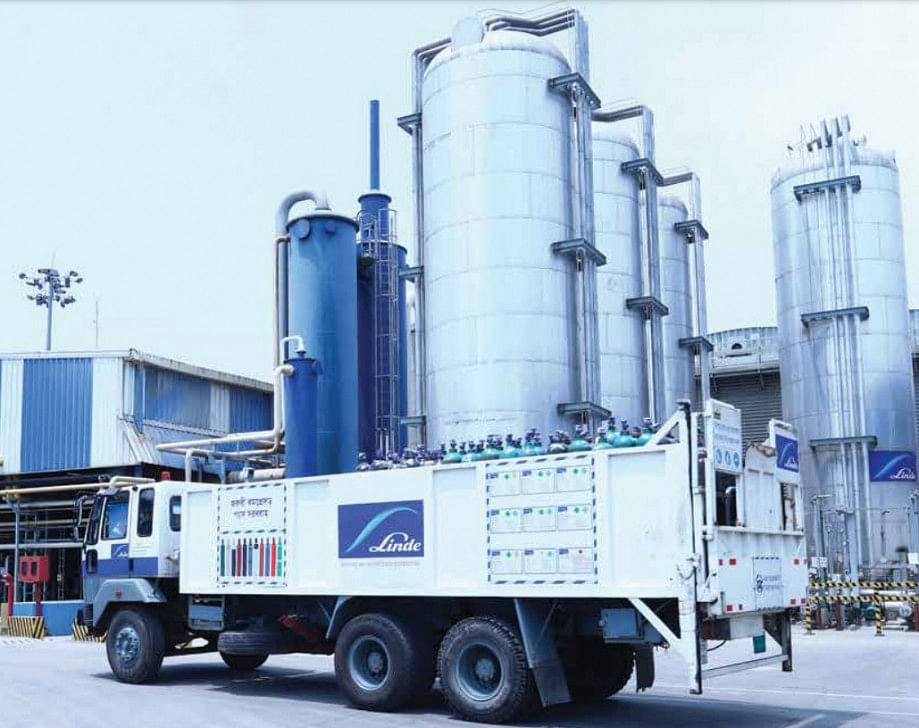
Mir Nasir believes uncertainty over energy security is currently the biggest challenge facing Bangladesh’s economy.
He said a large volume of inherited debt has put the country’s energy security under pressure. According to him, around Tk 600 billion remains unpaid in the power sector, severely affecting energy supplies. The business leader argued that no meaningful effort was made during the Awami League government’s three terms to boost gas exploration, either onshore or in offshore blocks in the Bay of Bengal.
As a result, domestic gas production is falling short of demand, forcing Bangladesh to import liquefied natural gas (LNG) to meet roughly 35 percent of its needs. He said uninterrupted gas supply is essential for industry and commerce.
Referring to ongoing drilling by Bangladesh Petroleum Exploration and Production Company Limited (BAPEX), Nasir said the state-owned company should be strengthened further, while offshore exploration initiatives should continue. He believes the country may begin to benefit from such efforts within a few years.
Stable Rules, Wider Tax Net
The industrialist blamed elevated bank interest rates and frequent adjustments to fiscal policies for compounding macroeconomic woes.
He described the existing revenue framework as “regressive”, pointing out that despite GDP growth and a per capita income exceeding $2,700, the tax base remains microscopic, with only 800,000 VAT payers and 4 million active taxpayers out of 10 million Taxpayer Identification Number (TIN) holders.
This stagnation leaves Bangladesh with the lowest tax-to-GDP ratio in Asia.
Nasir warned that erratic policy shifts, such as toggling corporate tax rates between 20 and 22 percent or introducing property taxes, create a complicated environment that deters entrepreneurs.
“To put the economy on a stronger footing, the highest priority must be job creation, and industry is the biggest source of that. We need to create an industry-friendly environment,” he said.
Push for Banking Reforms
The former FBCCI chief urged the government to prioritise reforms in the banking sector. He argued that many profitable banks now earn most of their income from treasury bonds rather than core banking activities.
According to him, in some cases 60 to 70 percent of bank earnings come from government securities, which he described as “unhealthy” for the financial system.
Banks should act as partners in economic development rather than merely profit-generating institutions, he said. Mir Nasir called for refinancing support for struggling businesses and reforms to improve liquidity and lending. He also questioned the merger of several weak banks into a new institution, suggesting an independent commission review whether the move was appropriate.
A better approach, he said, would have been allowing stronger banks to take over weaker ones under close supervision.
Fuel, Power Price Hikes
Mir Nasir also warned that recent increases in fuel and electricity prices would affect people’s lives, though he believes the government had little choice given rising global energy costs linked to the conflict in West Asia.
He said the government had already spent billions of dollars on subsidies before raising prices.
He also criticised what he described as unplanned expansion in the power sector under the Sheikh Hasina government, saying generation capacity had grown faster than fuel availability.
According to him, Bangladesh now has power generation capacity of around 25,000-26,000MW, while demand stands at roughly 14,000-15,000MW. Yet supply remains constrained because of gas shortages.
Nasir questioned why so many gas-based power plants had been approved despite inadequate fuel supplies, arguing that the resulting capacity payments have become a burden while fossil fuel-based plants are struggling.
“We are producing a large amount of electricity, but the sector has grown in an unplanned way. Greater discipline is needed so the government can gradually reduce its subsidy burden,” he said.
Inflation
Bangladesh Bureau of Statistics (BBS) data shows overall inflation rose to 9.42 percent in May, the highest in 16 months, up from 9.04 percent in April. The previous peak was 9.94 percent in January 2025. The Mir Group managing director argued that raising interest rates has done little to curb inflation while hurting businesses.
“There are many tools to tackle inflation, and interest rates are one of them. But in practice it has not delivered the expected results. Businesses have suffered, yet inflationary pressure remains,” he said.
He urged the government to focus on other areas, including supply chain management and foreign exchange management, saying improvements in these sectors would produce better outcomes. Nasir believes new investment has suffered because of high borrowing costs and rising production expenses.
“Investment is not being encouraged because many existing investors are struggling to survive. A large number of businesses and industries are under pressure.”

He also pointed to the sharp depreciation of the taka, saying many firms lost substantial capital when the exchange rate moved from around Tk 85 to Tk 122 per US dollar.
Companies with foreign currency liabilities, such as Usance Payable at Sight (UPAS) letters of credit (LCs) — a trade finance instrument that allows deferred payment for imports — were forced to absorb significantly higher repayment costs, eroding their capital base, he added.
How to Lift Investment
To boost both local and foreign investment, Nasir recommended lowering interest rates, ensuring reliable gas supplies and avoiding frequent changes in fiscal policies.
“We need energy security, a review of bank lending rates and refinancing support where necessary. Policy changes should not come too often, and policies must be pragmatic.”
He argued that revenue authorities often place greater pressure on existing taxpayers when collection targets are missed, increasing the cost of doing business.
“If these issues are addressed, investment may begin to rise,” he said.
Nasir added that foreign investors would only come when they see local investors operating comfortably.
“They will study all the parameters before making a decision. If domestic investors are struggling, foreign investors will not feel confident either.”
‘Good Governance the Key’
Mir Nasir identified weak governance as the single biggest risk to the economy, saying its absence fuels capital flight and bad loans while good governance alone can resolve many of the country’s problems.
On the government’s goal of building a trillion-dollar economy within three to five years, he said the target is not out of reach — but depends on resolving the current crisis within two years, as the finance minister has pledged. He pointed to several structural strengths: a growing entrepreneurial class, a competitive market, an agile workforce that picks up skills quickly, remittance inflows of around $30 billion a year and export earnings approaching $50 billion.
Nasir also highlighted rising purchasing power among a significant segment of the population.
“Roughly 25 to 30 percent of people now have strong purchasing power. Even if that translates to 50 to 60 million people, many European countries have smaller populations than that.”
“If we can make the entire ecosystem business-friendly, there is no reason we cannot become a trillion-dollar economy,” he said.