
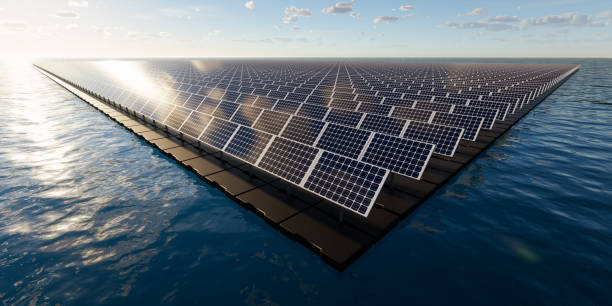
The Asian Development Bank (ADB) has approved a $1 million grant to support the development of floating solar photovoltaic (PV) systems in Tajikistan, an emerging technology for the mountainous Central Asian country.
According to Ko Sakamoto, ADB’s Country Director in Tajikistan, the initiative leverages the nation’s abundant solar and water resources.
“This innovative initiative aims to make the most of what Tajikistan has to offer: sun and water,” he said.
The project is designed to establish the foundation for a year-round, reliable, and environmentally sustainable energy supply.
With 93% of its territory covered by mountains, Tajikistan faces limited availability of flat land, most of which is allocated for agriculture or housing. These conditions make the construction of ground-mounted solar power facilities prohibitively expensive.
However, the country’s extensive network of reservoirs, with high solar exposure and pre-existing infrastructure, offers a viable alternative. Floating solar systems are being explored as a cost-effective and land-efficient solution to expand renewable energy output without displacing essential land uses.
Under the ADB grant, technical experts will assess up to five reservoirs to evaluate their suitability for floating PV installation. The results will inform a detailed feasibility study for the construction of a large-scale floating solar plant at one selected site.
The grant will also fund the modernization of the financial management system of Barki Tojik, the state-owned energy company. This component aims to improve the company’s operational efficiency and financial transparency.
Tajikistan has recently accelerated its shift toward clean energy. As previously reported by The Times of Central Asia, the country has launched its most ambitious solar energy initiative to date: the construction of two photovoltaic plants with a combined capacity of 500 megawatts. The scale of this project marks a strategic pivot toward energy diversification and sustainability.